Aluminum Foundry delivers strong aluminum casting results for industries
Wiki Article
Discovering the Different Uses and Applications of Aluminum Foundry in Modern Industries
Aluminum shops are integral to a large selection of modern-day industries. They generate lightweight and sturdy components that considerably improve performance and efficiency. From auto parts to aerospace structures, the applications are diverse and essential. As industries face boosting needs for technology and sustainability, the duty of Aluminum shops proceeds to advance. This brings forth intriguing advancements and challenges that value additional exploration.The Role of Aluminum Foundry in the Automotive Industry
As the automotive sector increasingly prioritizes weight decrease and gas performance, Aluminum factories have become vital factors to automobile manufacturing. These foundries produce light-weight Aluminum elements that help manufacturers adhere to rigid fuel economic climate standards and lower greenhouse gas discharges. The convenience of Aluminum permits the creation of intricate forms and designs, which boosts both capability and visual appeal in vehicles.Cast Aluminum components, such as engine blocks, transmission cases, and wheels, give considerable strength while preserving a lower total weight compared to traditional products. Furthermore, Aluminum's resistance to deterioration extends the life-span of auto components, driving down upkeep expenses for customers.
As electric lorries gain popularity, Aluminum factories play a crucial role in generating batteries and structural elements that sustain the shift to lasting flexibility. In general, the assimilation of Aluminum casting in auto manufacturing highlights the product's importance in advancing modern lorry layout and performance.
Aerospace Applications of Aluminum Castings
Light-weight Architectural Parts
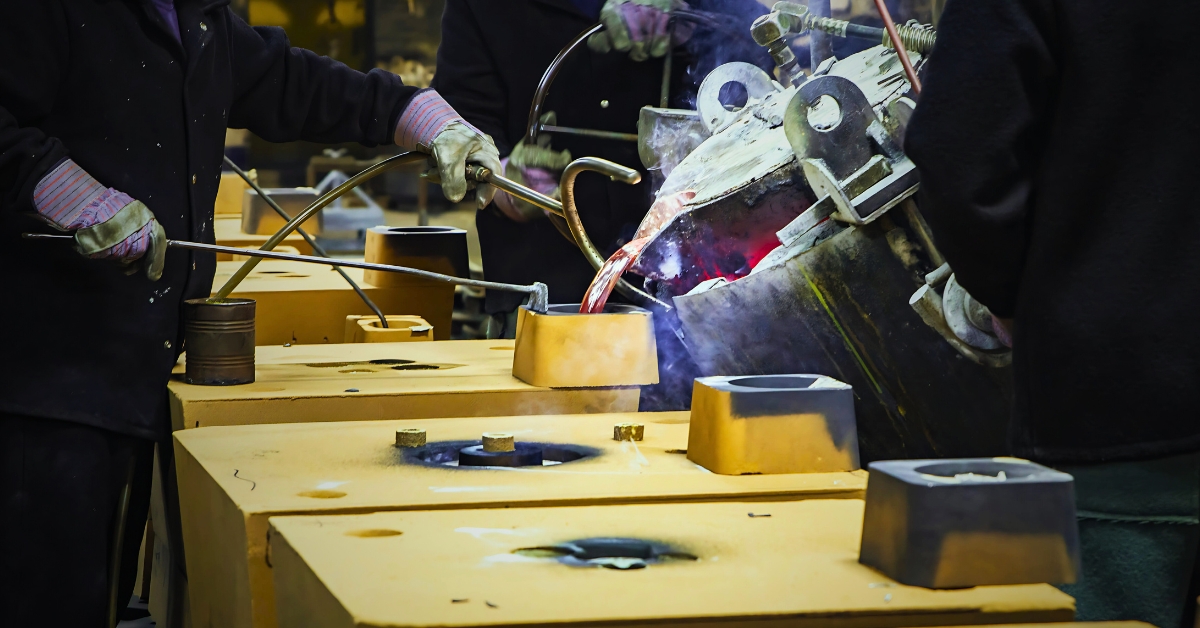
The aerospace market significantly depends on light-weight architectural elements to enhance fuel efficiency and overall performance. Aluminum spreadings play an essential function in attaining this goal, as they use a positive strength-to-weight proportion, making them suitable for numerous aerospace applications. These elements, such as aircraft structures, engine components, and landing gear, add to lowered total weight, which directly converts to decrease gas usage and emissions. In enhancement, the resilience and corrosion resistance of Aluminum assurance long-lasting performance under requiring problems. As producers look for to enhance their styles, Aluminum spreadings supply a flexible option, making it possible for the creation of components that meet stringent safety and reliability standards. This concentrate on lightweight products is essential for advancing the future of aviation technology.Facility Geometric Designs
Just how can complicated geometric layouts improve the efficiency and performance of aerospace elements? In the aerospace market, intricate Aluminum spreadings permit the development of lightweight yet durable parts, maximizing architectural integrity and wind resistant efficiency. These layouts make it possible for the assimilation of different features, such as cooling networks and reinforced locations, which traditional production approaches may not attain. By utilizing innovative casting methods, aerospace designers can produce components that conform exactly to the called for specifications, reducing product usage while optimizing strength. Additionally, the ability to create complicated forms reduces the need for assembly, simplifying manufacturing processes and enhancing dependability. On the whole, complex geometric designs play a necessary duty in fulfilling the demanding performance requirements critical for modern-day aerospace applications.Corrosion Resistance Characteristics
In aerospace applications, the performance of elements is markedly influenced by their resistance to rust. Aluminum castings are favored for their outstanding rust resistance, which is crucial for parts revealed to rough atmospheres, such as high-altitude trips and varying atmospheric conditions. The natural oxide layer formed on Aluminum surfaces gives a safety obstacle that substantially lowers deterioration prices. Furthermore, making use of alloying aspects like silicon and magnesium improves this property, making Aluminum spreadings specifically ideal for aircraft structures and engine components. The light-weight nature of Aluminum, combined with its rust resistance, contributes to improved gas performance and durability of aircraft. These characteristics emphasize the essential function of Aluminum Foundry in progressing aerospace innovations and ensuring the safety and security and dependability of air travel systems.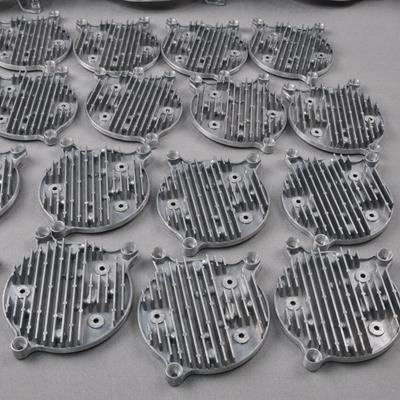
Enhancing Durable Goods With Aluminum Foundry Solutions
Aluminum Foundry options significantly enhance durable goods by allowing light-weight item layouts that enhance usability and mobility. Additionally, the intrinsic corrosion resistance of Aluminum extends the lifespan of these products, making them extra attractive to consumers. Economical production services better guarantee that business can supply premium things without compromising on cost.Lightweight Product Design
An expanding variety of durable goods suppliers are turning to Aluminum Foundry options to boost their product styles via lightweight products. By using Aluminum, these makers can generate items that are not only lighter however additionally retain stamina and longevity. This change towards lightweight product style permits boosted usability and efficiency, catering to customer demands for portable and easy-to-handle items. In addition, Aluminum's versatility helps with complex styles and modern-day appearances, attracting consumers who value both performance and design. The fostering of Aluminum Foundry strategies enables companies to introduce and separate their offerings in an affordable industry, inevitably bring about raised consumer contentment and commitment. This fad highlights the essential duty of product choice in contemporary product growth approaches.Rust Resistance Benefits
While lots of materials are vulnerable to deterioration, Aluminum stands out as a result of its all-natural resistance, making it a suitable choice for boosting durable goods. This innate building of Aluminum permits products to maintain their visual appeal and architectural stability Aluminum Foundry in time, also in difficult environments. As an example, things such as kitchenware, exterior furniture, and auto elements benefit greatly from Aluminum's capability to resist deterioration. Coatings and treatments can additionally enhance this particular, guaranteeing long life and toughness. Consequently, suppliers can produce trustworthy, low-maintenance products that satisfy customer demands for top quality and performance. Because of this, Aluminum Foundry remedies play a vital duty in fostering advancement throughout various industries by giving corrosion-resistant options that boost the criterion of consumer products.Cost-efficient Production Solutions
Transforming the landscape of manufacturing, Aluminum Foundry options supply an economical strategy to producing premium durable goods. These approaches enable producers to produce complex layouts while decreasing product waste, thereby reducing overall production costs. The lightweight nature of Aluminum enhances the effectiveness of transportation and handling, further reducing costs. Furthermore, the resilience of Aluminum guarantees that finished products maintain their integrity in time, decreasing the need for frequent replacements. Industries varying from auto to electronic devices take advantage of the convenience of Aluminum Foundry procedures, enabling ingenious styles that satisfy consumer demands without compromising on top quality. By leveraging these remedies, makers can stay affordable in an ever-evolving market, eventually enhancing product appeal and customer satisfaction.Aluminum Foundry Innovations in Building And Construction
As the building and construction sector seeks to enhance efficiency and sustainability, advancements in Aluminum Foundry applications are ending up being increasingly substantial. The lightweight nature of Aluminum, combined with its toughness and rust resistance, is changing standard building approaches. Advanced spreading methods enable the development of complex forms and designs that were formerly unattainable. This not only lowers material waste yet also lowers transport prices as a result of the lighter weight of structures.
The combination of Aluminum parts in modular building and construction is acquiring grip. Upreared Aluminum components improve setting up procedures on-site, resulting in much shorter job timelines. Furthermore, the recyclability of Aluminum sustains sustainable building techniques, aligning with worldwide objectives for lowered environmental effect.
Advancements such as 3D printing of Aluminum and boosted alloys additionally increase the product's applications, providing designers and designers with better flexibility in design and performance. In general, these innovations position Aluminum Foundry processes as critical in contemporary building and construction.
The Impact of Aluminum Casting on Electronics Manufacturing
Aluminum casting plays a vital duty in electronics manufacturing, particularly due to its beneficial properties such as thermal conductivity and lightweight nature. These qualities make Aluminum an optimal option for different electronic components, including heat sinks, rooms, and architectural components. The capacity to successfully dissipate warmth is important in digital gadgets, as it helps keep optimum performance and extends component lifespan.Moreover, Aluminum's lightweight nature adds to the total decrease in gadget weight, which is progressively essential in portable electronic devices. The spreading procedure enables for exact dimensions and detailed styles, assisting in the production of intricate forms that meet the rigorous demands of modern technology.
In addition, Aluminum's corrosion resistance boosts the longevity of electronic products, making them appropriate for diverse settings. In general, Aluminum spreading considerably boosts the performance, performance, and durability of digital devices, strengthening its significance in the ever-evolving electronic devices producing landscape.
Lasting Practices in Aluminum Foundry Operations
Applying sustainable techniques in Aluminum Foundry operations is coming to be increasingly crucial as industries seek to decrease their environmental effect. Shops are embracing energy-efficient modern technologies, such as sophisticated melting and spreading procedures that decrease power intake. Furthermore, making use of recycled Aluminum greatly reduces the carbon impact connected with main Aluminum production.Water conservation techniques are likewise important, with many factories implementing closed-loop water systems to lessen waste and boost efficiency. Additionally, the fostering of eco-friendly materials and finishes lowers unsafe emissions during casting.
Waste administration methods, including the recycling of scrap metal and the appropriate disposal of dangerous materials, are vital to making sure a lasting procedure. By incorporating these methods, Aluminum factories can not only adhere to environmental policies however also enhance their competitiveness in a market increasingly concentrated on sustainability (Aluminum Foundry). These initiatives show a dedication to both environmental stewardship and operational efficiency
Future Trends in Aluminum Foundry Modern Technology
While the Aluminum Foundry sector proceeds to progress, numerous crucial fads are arising that pledge to reshape its future. One significant trend is the raising fostering of sophisticated automation and robotics, which enhance efficiency and precision in casting procedures. This change allows foundries to lower labor expenses while improving manufacturing high quality. Additionally, the integration of fabricated knowledge and artificial intelligence is anticipated to enhance operations by forecasting maintenance needs and enhancing workflow.An additional crucial trend is the focus on sustainability, with factories increasingly taking on environment-friendly practices, such as reusing Aluminum scrap and utilizing eco-friendly energy resources. The advancement of light-weight Aluminum alloys is acquiring grip, specifically in the automobile and aerospace industries, where weight decrease is critical for performance and gas efficiency. As the market embraces these improvements, the Aluminum Foundry sector is poised for a much more sustainable and ingenious future.
Regularly Asked Questions
What Are the Environmental Effects of Aluminum Foundry Workflow?
The environmental impacts of Aluminum Foundry procedures consist of air pollution from emissions, water contamination from overflow, and power intake. These factors contribute to ecological deterioration and present wellness threats to bordering ecological communities and communities.How Does Aluminum Casting Compare to Other Metal Casting Approaches?
Aluminum casting offers advantages such as lower weight and corrosion resistance compared to other methods like steel or iron casting. Additionally, it enables complex layouts, boosting functionality while reducing material waste in manufacturing procedures.What Precaution Are Implemented in Aluminum Foundries?
Safety measures in Aluminum foundries consist of personal protective equipment, proper air flow, fire safety and security methods, routine devices maintenance, employee training on hazards, and adherence to governing criteria to lessen dangers connected with heats and liquified steel.What Is the Cost-Effectiveness of Aluminum Foundry Solutions?
The cost-effectiveness of Aluminum Foundry services is significant, as they offer light-weight products, minimized energy consumption, and reduced production costs. These variables add to improved efficiency and productivity in different producing sectors.Just How Can Local Business Make Use Of Aluminum Foundry Solutions?
Small organizations can use Aluminum Foundry services by contracting out production for personalized elements, reducing production costs, and leveraging reduced volume needs. This enables them to introduce quickly and complete efficiently without hefty preliminary investments in devices.As the automotive market increasingly focuses on weight decrease and fuel performance, Aluminum factories have actually emerged as crucial contributors to automobile manufacturing. Aluminum Foundry options noticeably enhance consumer items by enabling light-weight item designs that enhance use and portability. A growing number of customer goods producers are transforming to Aluminum Foundry solutions to improve their item layouts through lightweight products. As the construction industry looks for to boost efficiency and sustainability, advancements in Aluminum Foundry applications are coming to be increasingly significant. By incorporating these techniques, Aluminum shops can not only comply with environmental guidelines yet also enhance their competitiveness in a market progressively concentrated on sustainability.
Report this wiki page